The 5 Invisible Moments Your Attendees Will Remember (But You’ll Likely Forget)
If you’ve ever planned an event, you know the drill.
Lock in the venue, book the keynote, wrangle the panellists, and pray the A/V team ate breakfast—what I like to call the “Event Planner Cardio Routine.”
But let me tell you a secret I learned the hard way…
One of my most talked-about events—the moment people still bring up years later—was a complete afterthought.
And no, it wasn’t a show-stopping keynote.
It wasn’t the flawless PowerPoint (that’s a fictional example, by the way… there’s no such thing as a flawless PowerPoint ;-).
It wasn’t even the catered lunch that mysteriously “went missing” after the keynote speaker took two sandwiches.
It was a tiny moment. A hallway moment. An unplanned, almost invisible moment that the audience bonded over.
Let me paint the scene.
 The After-Thought That Became the Highlight
A few years ago, I spoke at a conference where—because we were running behind—someone tossed a small “gratitude wall” in the foyer. Literally a whiteboard on wheels with some sticky notes and markers that barely worked. The planner told me, “We just need something so the hallway doesn’t look empty.”
By the end of the day, that sad little corkboard looked like Times Square in sticky-note form.
Attendees were huddled around it, sharing stories, laughing, adding notes, and taking photos. I heard more people say, “Did you see that gratitude board?!” than “Great keynote!” (which bruised my ego slightly, but I’ll allow it).
The lesson?
While planners obsess about the main stage, attendees often fall in love with the moments in between.
It’s not the mic drop—it’s the quiet spark.
So today, let’s pull back the curtain and look at the five invisible moments your attendees will remember long after the badges are packed away.
1. The Arrival Energy
Before the first slide clicks, your attendees have already formed an opinion.
Is the signage clear—or do they wander around the lobby like they’re in a scavenger hunt nobody signed up for?
- Is there music playing?
- A friendly face?
- A volunteer who actually looks like they meant to be there?
It was so lovely at the 2025 California Restaurant Show, they had staff at the door, whose entire job was to say:
“Welcome! We’re glad you’re here.”
That tiny greeting set the tone for the whole day. Attendees later said it made them feel “seen,” “calm,” and “comfortable.”
Imagine… a warm welcome beating out the keynote. That’s the power of Moment #1.
2. The Check-In Experience
I’ve seen check-in tables so chaotic they could double as escape-room challenges.
But here’s the thing planners forget:

Check-in is your handshake before your handshake.
When attendees arrive and the line moves quickly, the tech works, and someone offers them a coffee coupon? Chef’s kiss.
When it doesn’t?
Let’s say they’ll bring it up at lunch. And dinner. And in the feedback forms, where they weaponize emojis.
I was so lucky last September, while planning my first-ever TEDxDevon, to partner with Rob Tinga of Visible ID. I was in a little bit of a quandary about how and what to use as nametags. I knew that the package of ‘Hello… My Name is…’ stickers I could get at Staples were not going to cut it.
In my discussions with Rob. I told him about my vision for the event’s various touchpoints. After all, the first chapter of my book, LIGHTS! CAMERA! ACTION! is called Experience Expectations, so I knew I needed to do something special.
 We discussed what the name tags should look like and agreed that the information should be printed on both sides. We know the one Murphy’s Law that says when you coat a piece of bread with peanut butter and jelly and accidentally drop it on the floor, it will always land jelly-side down!
Well, the same for name tags…. When you print only one side of a nametag, the printed side will always face the wearer’s belly button. That one act of printing names on both sides was recognized by all the attendees I talked to. “That’s a nice touch… printing on both sides.”
Small touches—pre-stuffed badges, cheerful check-in staff, clear signage—build goodwill that follows them into the sessions.
3. The Hallway Magic
Planners schedule content…. Attendees schedule conversations.
It’s the accidental meet-up by the water or coffee stations that matter most.
The “Oh hey, didn’t we meet at last year’s conference?”
The spontaneous brainstorming over a half-finished muffin.
Hallway moments often create more meaningful connections than a breakout ever could. I often tell planners: You don’t need more sessions—you need more excuses (and time) for connection.
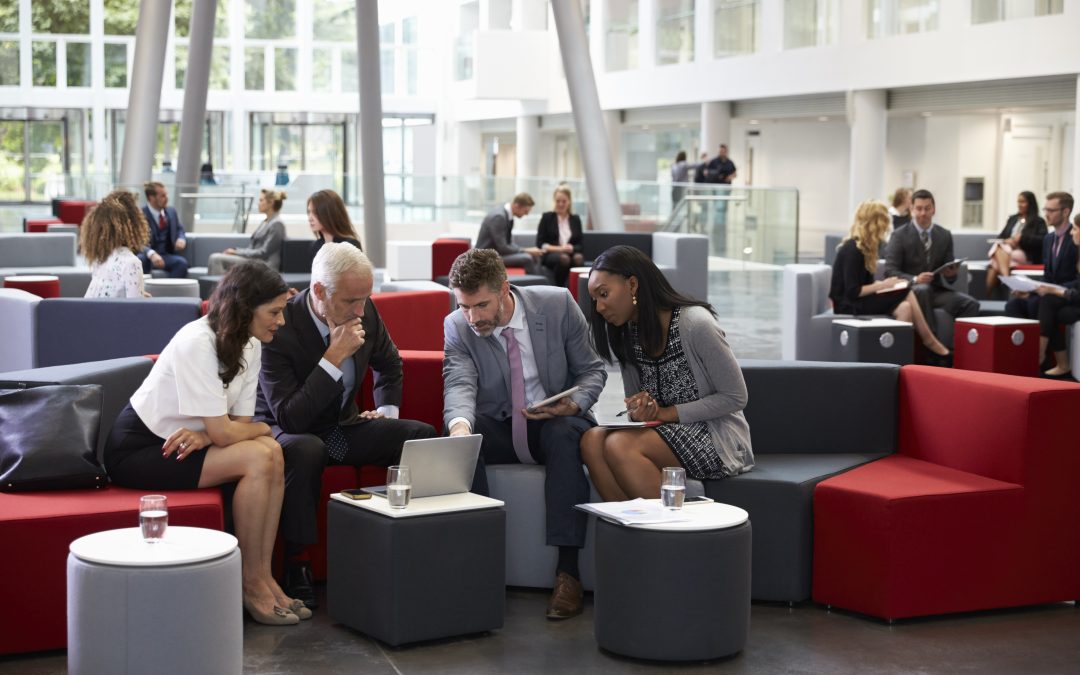
For one event I helped plan, the hallway was the same width as a ballroom… it was massive. We had to be super intentional to create collision spaces—not so much that it impeded the flow from one room to the next, but enough so that people could make eye contact and smile.
When you think about your room layouts, make sure you are intentional with creating those collision spaces. You can think about:
- Create seating clusters.
- Leave conversation prompts on tables.
- Offer nibble-sized snack stations that keep people moving around around (yet somehow avoid pockets full of crumbs).
Make the hallway the heartbeat of your event.
4. The Coffee Break Escape Hatch
People don’t take breaks for coffee. They go to:
- Check messages
- Recalibrate their attention span
- Hide from coworkers
- Breathe
- And yes… finally get that snack they’ve been eyeing since 9:15.
But here’s what they remember:
Whether your break felt like a pit stop or a gift.
- Fresh fruit instead of stale muffins.
- A quiet lounge area instead of a hallway bottleneck.
- A few “Did-you-know?” table tents that spark conversation.
One planner added a “mindful minute” video during breaks—a looping nature clip with soft music.
People still email her about it.
All because she made space for people to reset.
5. The Post-Event Takeaway (AKA the “Sigh of Relief” Moment)
Your attendees’ last emotional experience is the one that sticks the hardest.
This could be:
- A thank-you gift they didn’t expect – maybe the branded swag bottle can be held back until after?
- A follow-up email that actually gives them actionable next steps
- A simple, heartfelt thank-you message from the organizer
- A link to resources that don’t require them to “subscribe to our list,? “create an account” or “verify their soul via two-factor authentication.”
End strong, and they’ll talk about your event for months.
End abruptly, and it’ll feel like someone flipped the lights on in the middle of a good party.
So… What Does This Mean for You?
Events aren’t made memorable by the big moments. They’re made unforgettable by the human ones. The shared human experiences.
Your attendees will remember:
- How they felt when they walked in
- Who they met when they weren’t looking for anyone
- The surprise touches
- The tiny wins
- The after-thoughts
And yes, sometimes they’ll remember the keynote—if the speaker doesn’t take two sandwiches again.
The magic of extraordinary events is created in the margins. And when planners design with those margins in mind…
That’s when events transform from “Well done” to “We have to come back next year.”
Final Thought
You don’t need a bigger budget. You need intentional moments. Human moments. Invisible moments.
Because the things you’re likely to forget… These are often the moments your attendees will never stop talking about.
About the Author
 Marc Haine is a customer and employee experience strategist, keynote speaker, and founder of Elite Headline Speakers, where he helps meeting planners curate the best speakers in the business to create jaw-dropping, show-stopping events their attendees rave about long after the lights go down.
With over 30 years in events, hospitality, leadership, and customer-facing industries, Marc blends real-world experience with a theatrical flair—thanks to his best-selling book, Lights! Camera! Action!: Business Operational Excellence Through the Lens of Live Theatre. He’s also the host of Marc Haine Live and Experience Leadership: The Small Business Podcast, where he uncovers practical tools for leaders and business owners to elevate their teams and culture.

Marc is known for his energetic delivery, quick wit, and ability to turn everyday challenges into “aha” moments. His mission is simple: help organizations create meaningful experiences—on stage, on site, and in every engagement that matters.
When he’s not speaking or coaching, you can find him designing better attendee journeys, hunting for exceptional speakers for planners, or reminding event volunteers that smiling is technically part of their job description.